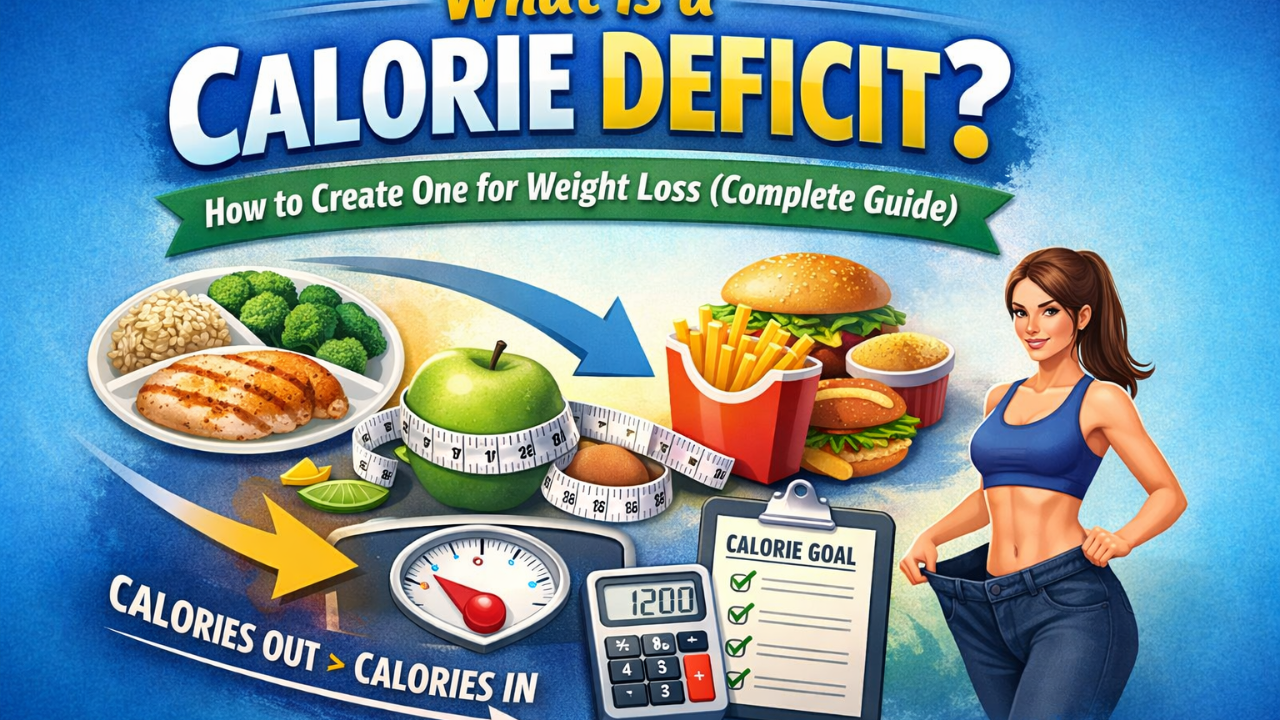
Calorie deficit for weight loss is the foundation of every successful fat loss journey. Whether you follow keto, intermittent fasting, or a simple healthy eating plan, weight loss happens when you consume fewer calories than your body burns.
Your body then uses stored energy, including fat, to make up the difference. Understanding how a calorie deficit works helps you lose weight in a realistic and sustainable way.
Every successful weight loss method has one thing in common: a calorie deficit.
Whether someone follows keto, intermittent fasting, a meal plan, or a traditional diet, fat loss happens when the body uses more energy than it receives from food.
A calorie deficit is the foundation behind weight loss because your body needs energy every day to survive. When you consume fewer calories than your body burns, it starts using stored energy, including body fat, to make up the difference.
Understanding what is a calorie deficit gives you control over your progress. Instead of chasing every new diet trend, you can focus on the simple principle that actually determines whether you lose weight.
What Is a Calorie Deficit?
A calorie deficit happens when you eat fewer calories than your body needs to maintain its current weight.
Your body burns calories every day through:
- Breathing and basic body functions
- Digestion
- Walking and daily movement
- Exercise and physical activity
- Maintaining muscle and body temperature
The total amount of energy your body burns each day is called your Total Daily Energy Expenditure (TDEE).
For example:
If your body burns 2,400 calories per day and you eat 1,900 calories, you create a 500-calorie deficit.
Your body then needs to get the missing energy from stored sources, mainly body fat.
Over time, this leads to weight loss.
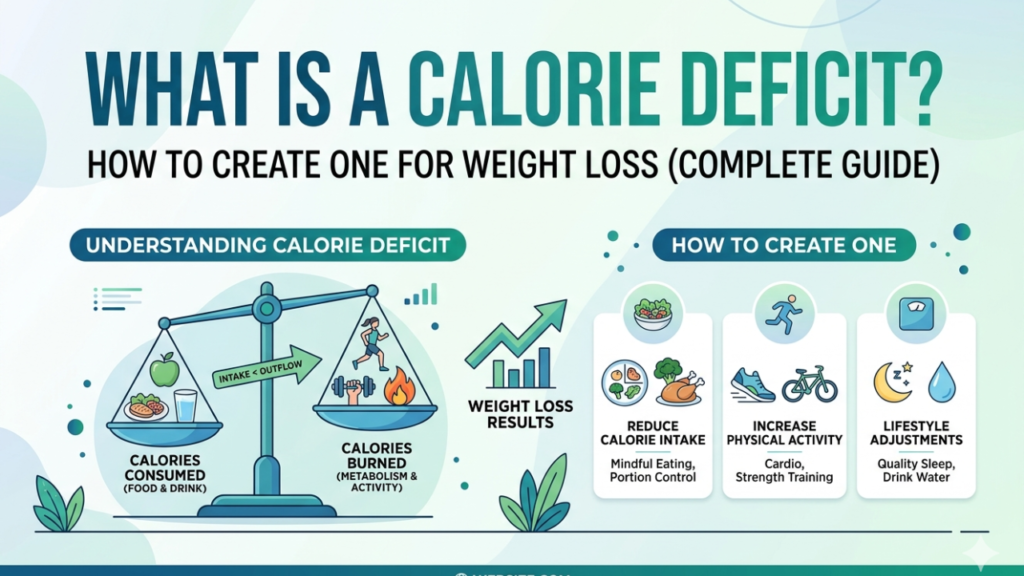
How Does a Calorie Deficit Help You Lose Weight?
Your body is constantly balancing energy.
When you eat more calories than you burn, the extra energy is stored. This can lead to weight gain over time.
When you eat fewer calories than you burn, your body has to use stored energy.
This creates fat loss.
The basic formula is:
Calories consumed < Calories burned = Weight loss
However, the quality of your calories still matters. Two people can eat the same number of calories but have very different results depending on protein intake, food choices, sleep, and activity levels.
How to Create a Calorie Deficit for Weight Loss
Creating a calorie deficit does not mean starving yourself or eating tiny portions. The goal is to eat slightly less than your body needs while still getting enough nutrients.
Here is how to create a calorie deficit step by step.
Step 1: Calculate Your Maintenance Calories
The first step is finding your estimated maintenance calories.
Your maintenance calories are the amount of food you can eat while keeping your weight stable.
You can estimate this by using a TDEE calculator and entering:
- Age
- Height
- Weight
- Gender
- Activity level
This gives you an estimate of how many calories your body burns each day.
Step 2: Reduce Calories by 300–500 Per Day
For most people, a moderate calorie deficit works best.
A daily deficit of 300–500 calories is usually enough to create steady weight loss while keeping energy levels higher.
A common guideline:
- 300 calorie deficit: slower but easier to maintain
- 500 calorie deficit: standard approach for steady fat loss
- 700+ calorie deficit: harder to maintain and may increase muscle loss risk
A sustainable calorie deficit helps you build habits that last instead of following extreme diets that are difficult to continue.
Why a Calorie Deficit Does Not Mean Starving
Many people think weight loss requires extreme hunger, but that is not true.
A successful calorie deficit is about eating smarter, not simply eating less.
You can create a deficit by choosing foods that keep you full, such as:
- High-protein foods
- Vegetables
- Fruits
- Whole grains
- Lean meats
- Healthy fats
Protein and fibre are especially important because they help control hunger and make a lower-calorie diet easier to follow.
The goal is not to feel miserable. The goal is to create a small energy gap that your body can maintain.
The Biggest Mistakes People Make With a Calorie Deficit
1. Creating Too Large of a Deficit
A very aggressive calorie deficit may produce fast results at first, but it often creates problems.
Eating too little can lead to:
- Extreme hunger
- Low energy
- Poor workout performance
- Muscle loss
- Strong cravings
A moderate calorie deficit is usually more effective because you can stick with it longer.
2. Ignoring Hidden Calories
Many people underestimate how many calories they consume.
Common hidden calorie sources include:
- Sugary drinks
- Coffee additions
- Cooking oils
- Sauces
- Alcohol
- Snacks
A few small extras throughout the day can easily add hundreds of calories.
Tracking your food for a short period can help you understand where your calories are coming from.
3. Not Adjusting Your Calories Over Time
Your body weight affects how many calories you burn.
As you lose weight, your TDEE may decrease because a smaller body requires less energy.
For example:
Someone weighing 90 kg may maintain their weight on more calories than someone weighing 75 kg.
This means you may need to adjust your calorie intake as your progress continues.
4. Eating Back Exercise Calories
Exercise is great for improving fitness and burning extra calories.
However, many people overestimate how many calories they burn during workouts.
For example, a workout may burn fewer calories than expected, but it is easy to eat those calories back through extra snacks or larger portions.
Exercise should support your calorie deficit, not completely replace it.
How to Make a Calorie Deficit Easier to Maintain
The best calorie deficit is one you can follow consistently.
Here are simple ways to make it easier:
Eat More Protein
Protein helps preserve muscle while losing fat and keeps you feeling full.
Good protein sources include:
- Eggs
- Chicken
- Fish
- Greek yogurt
- Lean meat
- Beans
- Protein shakes
Choose High-Volume Foods
High-volume foods allow you to eat larger portions with fewer calories.
Examples:
- Vegetables
- Salads
- Fruit
- Soup
- Potatoes
- Lean proteins
These foods help you feel satisfied while staying within your calorie target.
Drink Enough Water
Sometimes people confuse thirst with hunger.
Drinking enough water throughout the day can support better appetite control and overall health.
Keep Foods You Enjoy
A good weight loss plan should include foods you like.
You do not need to completely remove pizza, chocolate, or your favorite meals.
The key is balance.
A flexible approach is easier to maintain than a strict diet that feels impossible.
Do You Need to Track Calories?
Tracking calories can be helpful, especially when starting.
Apps like food trackers can teach you:
- Portion sizes
- Calorie amounts
- Protein intake
- Eating patterns
However, not everyone needs to track forever.
Some people lose weight by focusing on:
- Eating more protein
- Reducing processed foods
- Controlling portions
- Eating more vegetables
The important thing is finding a method you can maintain.
Frequently Asked Questions About Calorie Deficits
Can You Lose Weight Without Counting Calories?
Yes.
Many people lose weight without tracking every calorie. Improving food quality, increasing protein, and controlling portions can naturally create a calorie deficit.
However, understanding calories makes it easier to identify why progress may stop.
How Many Calories Should I Cut to Lose Weight?
Most people start with a 300–500 calorie deficit per day.
The right amount depends on your body size, activity level, goals, and how easily you can maintain the deficit.
Why Am I Not Losing Weight in a Calorie Deficit?
Common reasons include:
- Underestimating food portions
- Forgetting drinks and snacks
- Not tracking accurately
- Water weight changes
- Your calorie needs have decreased
Weight loss is not always perfectly linear, so looking at long-term trends is more useful than daily changes.
Is a Calorie Deficit the Same for Everyone?
The principle is the same for everyone: you need to burn more calories than you consume to lose weight.
But the exact calorie number is different for each person.
Your needs depend on:
- Age
- Height
- Weight
- Muscle mass
- Activity level
- Lifestyle
That is why your personal calorie deficit will look different from someone else’s.
Final Thoughts: The Simple Truth About Calorie Deficits
A calorie deficit is the most important concept to understand for weight loss.
You do not need extreme diets or complicated rules. You need a consistent approach that creates a small gap between the calories you eat and the calories your body burns.
Learning how to create a calorie deficit gives you a simple, flexible tool that works with almost any healthy eating style.
Focus on eating nutritious foods, getting enough protein, staying active, and creating a deficit you can maintain. That is what leads to long-term results.
7-Day Calorie Deficit Guide: How to Create One for Weight Loss
7-Day Calorie Deficit Guide: How to Create One for Weight Loss
7-Day Calorie Deficit Guide: How to Create One for Weight Loss
7-Day Calorie Deficit Guide: How to Create One for Weight Loss
7-Day Calorie Deficit Guide: How to Create One for Weight Loss
7-Day Calorie Deficit Guide: How to Create One for Weight Loss
7-Day Calorie Deficit Guide: How to Create One for Weight Loss
7-Day Calorie Deficit Guide: How to Create One for Weight Loss
7-Day Calorie Deficit Guide: How to Create One for Weight Loss
7-Day Calorie Deficit Guide: How to Create One for Weight Loss
7-Day Calorie Deficit Guide: How to Create One for Weight Loss
7-Day Calorie Deficit Guide: How to Create One for Weight Loss
7-Day Calorie Deficit Guide: How to Create One for Weight Loss
7-Day Calorie Deficit Guide: How to Create One for Weight Loss
7-Day Calorie Deficit Guide: How to Create One for Weight Loss
7-Day Calorie Deficit Guide: How to Create One for Weight Loss
7-Day Calorie Deficit Guide: How to Create One for Weight Loss
7-Day Calorie Deficit Guide: How to Create One for Weight Loss
7-Day Calorie Deficit Guide: How to Create One for Weight Loss
7-Day Calorie Deficit Guide: How to Create One for Weight Loss
7-Day Calorie Deficit Guide: How to Create One for Weight Loss