Building muscle is one of the most common fitness goals, especially for beginners who want to look stronger, feel healthier, and improve their confidence. But one question comes up again and again: what is the fastest way to build muscle?
The truth is simple. The fastest way to build muscle is not by chasing magic supplements, copying advanced workouts, or training every day without a plan. Real muscle growth comes from combining progressive strength training, enough protein, quality sleep, and consistency.
If you are just getting started, this guide will show you exactly how to build muscle for beginners in a smart, safe, and effective way. You will learn what works, what wastes time, and how to create a routine that helps you grow muscle as fast as possible without making beginner mistakes.
[Image Placement: Featured image here – a beginner-friendly gym scene with dumbbells, barbell, and healthy meal prep]
Why Beginners Can Build Muscle Faster Than They Think
The good news is that beginners often see progress faster than experienced lifters. This is sometimes called “newbie gains.” When your body starts resistance training for the first time, it responds quickly.
In the early stage, your muscles are learning how to handle tension, your nervous system becomes more efficient, and your body adapts to training. That means with the right plan, a beginner can see noticeable changes in strength, muscle fullness, posture, and body shape within a few weeks.
This is why build muscle for beginners strategies should focus on the basics. You do not need extreme workouts. You need the right habits repeated every week.
The Fastest Way to Build Muscle: The 5 Keys That Actually Work
If you want the shortest path to muscle growth, focus on these five things:
1. Train with progressive overload
Your muscles grow when you challenge them more over time. This is called progressive overload. That means adding a little more weight, more reps, better control, or more total work as the weeks go on.
2. Eat enough protein
Muscles need protein to repair and grow. If you train hard but do not eat enough protein, your results will slow down.
3. Get enough calories
To build muscle fast, most beginners need to eat at least at maintenance calories or slightly above. A small calorie surplus helps your body build tissue more efficiently.
4. Sleep and recover
Muscle does not grow during the workout. It grows while you recover. Poor sleep can reduce strength, recovery, and progress.
5. Stay consistent for months
A lot of people quit too early. They train for two weeks, then change the plan. Fast muscle growth comes from doing the right things long enough to let results happen.
What Causes Muscle Growth?
Before building a plan, it helps to understand how muscle growth works.
When you do resistance training like lifting weights, your muscles experience tension and tiny amounts of stress. Then your body repairs that tissue and makes it stronger so it can handle that challenge better next time.
That process is called muscle hypertrophy.
Three major things help trigger muscle growth:
Mechanical tension
This comes from lifting weights with proper form and control. It is one of the biggest drivers of muscle growth.
Muscle damage
Training creates small amounts of muscle damage, especially when you are new. Your body repairs that damage and adapts.
Metabolic stress
That burning feeling during higher-rep sets can also support growth, especially when combined with good training.
For build muscle for beginners, the goal is not to destroy your body every workout. The goal is to create enough stimulus for growth, then recover properly.
[Image Placement: After the section on muscle growth – an infographic showing workout, protein, sleep, and recovery]
Best Training Style to Build Muscle for Beginners
The fastest way to build muscle for beginners is to use a simple strength and hypertrophy training plan built around compound movements.
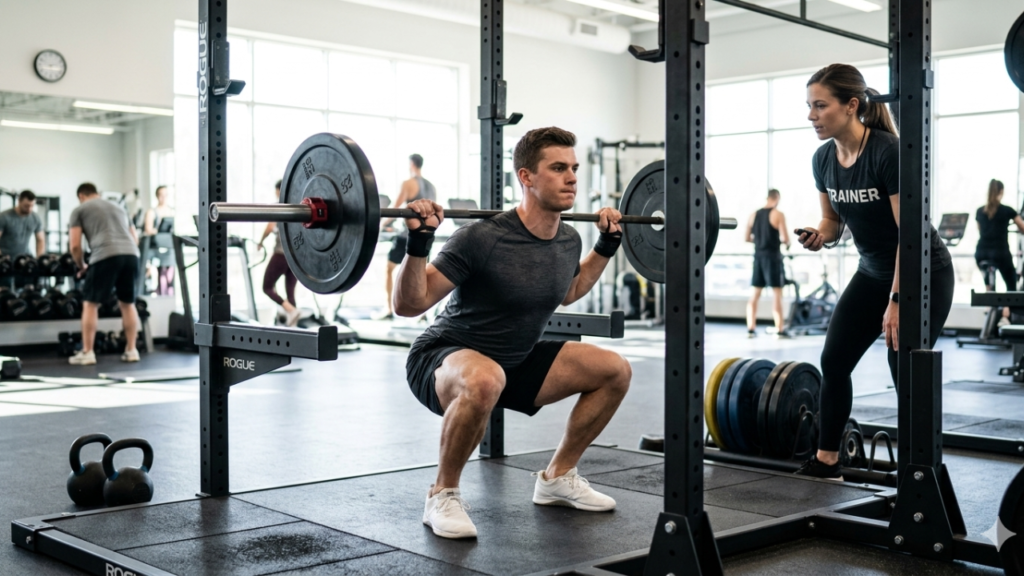
Compound exercises work multiple muscle groups at once. They save time and help you build strength quickly.
Examples include:
- Squats
- Deadlifts
- Bench press
- Overhead press
- Pull-ups or lat pulldowns
- Rows
- Lunges
- Dumbbell presses
These exercises should be the base of your routine.
Why compound lifts matter
Compound lifts let you train more muscles with fewer exercises. They also make it easier to progress with weight over time.
For example, a squat trains your legs, glutes, and core. A bench press trains your chest, shoulders, and triceps. A row trains your back and biceps.
If your goal is to build muscle fast, these exercises should come first in your workout.
Do isolation exercises help?
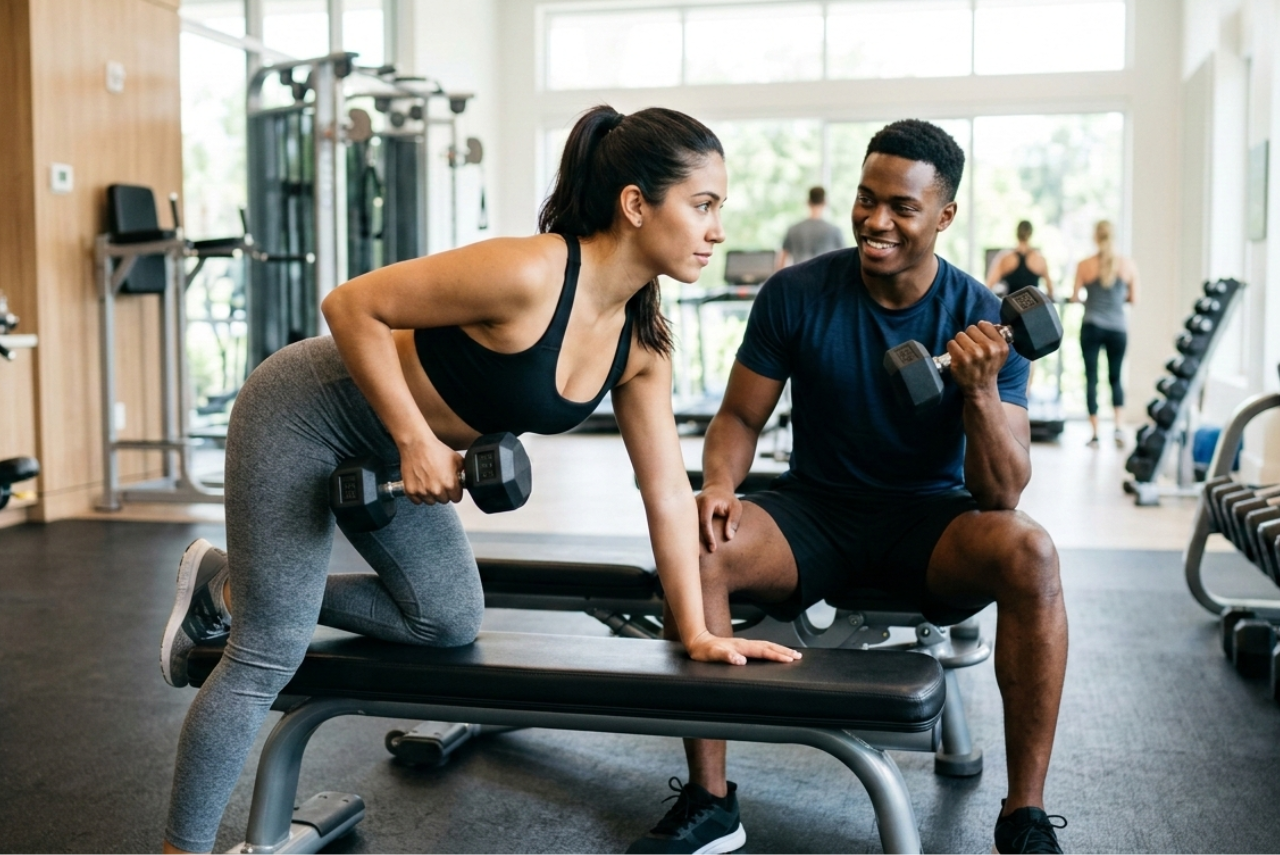
Yes, they do. Isolation exercises target one muscle more directly, such as bicep curls, tricep pushdowns, leg extensions, and lateral raises.
These are useful after your main compound lifts, especially if you want to bring up certain areas. But beginners should not make them the main focus.
The Best Weekly Workout Split for Fast Muscle Growth
A beginner does not need a complicated six-day split. In fact, simpler plans often work better.
Option 1: Full-body workouts 3 times per week
This is one of the best approaches for beginners.
Example schedule:
- Monday: Full body
- Wednesday: Full body
- Friday: Full body
This works well because you train each muscle group multiple times per week, which is great for growth and skill development.
Option 2: Upper/lower split 4 times per week
Example schedule:
- Monday: Upper body
- Tuesday: Lower body
- Thursday: Upper body
- Friday: Lower body
This is also excellent for beginners who can train four times each week.
For most people starting out, either option will work. The best one is the one you can follow consistently.
[Image Placement: Before workout plan example – a clean weekly workout schedule graphic]
Example Full-Body Beginner Muscle-Building Workout
Here is a beginner-friendly routine designed to help you build muscle for beginners without overcomplicating things.
Workout A
- Barbell squat or goblet squat: 3 sets of 6 to 10 reps
- Bench press or dumbbell bench press: 3 sets of 6 to 10 reps
- Bent-over row or seated cable row: 3 sets of 8 to 12 reps
- Romanian deadlift: 3 sets of 8 to 10 reps
- Dumbbell shoulder press: 2 to 3 sets of 8 to 12 reps
- Plank: 3 sets of 30 to 60 seconds
Workout B
- Deadlift or trap bar deadlift: 3 sets of 5 to 8 reps
- Incline dumbbell press: 3 sets of 8 to 12 reps
- Lat pulldown or assisted pull-up: 3 sets of 8 to 12 reps
- Walking lunges: 3 sets of 10 reps each leg
- Lateral raises: 2 to 3 sets of 12 to 15 reps
- Bicep curls: 2 sets of 10 to 12 reps
- Tricep pushdowns: 2 sets of 10 to 12 reps
Alternate Workout A and Workout B across the week.
Example:
- Week 1: A, B, A
- Week 2: B, A, B
This gives you a balanced approach and enough recovery time.
How Heavy Should You Lift?
A common beginner mistake is either lifting too light or too heavy.
If the weight is too light, your muscles do not get enough stimulus. If it is too heavy, your form breaks down and injury risk goes up.
A good rule is to choose a weight that lets you finish your set with 1 to 3 reps left in the tank. That means the last few reps feel challenging, but you can still keep proper form.
Best rep ranges for muscle growth
For beginners, these rep ranges work very well:
- 5 to 8 reps for bigger compound lifts
- 8 to 12 reps for most exercises
- 12 to 15 reps for smaller isolation movements
The key is not just the rep number. The key is effort, control, and progression.
How to Progress Every Week
If you want fast results, you need a plan to improve. Here are easy ways to use progressive overload:
Add reps
If you did 8 reps last week, try for 9 or 10 this week.
Add weight
When you can do all your sets at the top of the rep range with good form, increase the weight slightly.
Improve form
Better control, better range of motion, and better technique all count as progress.
Increase total volume
Over time, you may add an extra set for certain exercises if recovery is good.
Write your workouts down. Tracking your training is one of the easiest ways to build muscle faster.
Nutrition: The Fastest Way to Support Muscle Growth

Training is only part of the process. Food matters just as much.
If you want to build muscle, your body needs enough energy and nutrients to recover and grow.
Eat enough calories
If you are very underweight or struggle to gain size, eating in a small calorie surplus will help.
A good starting point is about 200 to 300 extra calories per day above maintenance.
This helps muscle growth while limiting excess fat gain.
Eat enough protein
Protein is the most important nutrient for muscle building.
A strong target for most people is:
1.6 to 2.2 grams of protein per kilogram of body weight per day
Good protein sources include:
- Chicken
- Turkey
- Eggs
- Greek yogurt
- Cottage cheese
- Fish
- Lean beef
- Milk
- Tofu
- Tempeh
- Beans and lentils
- Protein powder if needed
Do not fear carbs
Carbohydrates help fuel your workouts and support recovery. They are especially useful if you train hard.
Good carb sources include:
- Rice
- Oats
- Potatoes
- Sweet potatoes
- Whole grain bread
- Pasta
- Fruit
- Beans
Include healthy fats
Fats support hormones and overall health.
Good sources include:
- Avocados
- Nuts
- Seeds
- Olive oil
- Fatty fish
- Peanut butter
[Image Placement: In the nutrition section – high-protein meal prep image with rice, chicken, eggs, vegetables, and oats]
Sample Muscle-Building Meal Plan for Beginners
Here is a simple example of how a day of eating might look.
Breakfast
- Oatmeal with milk
- 2 to 3 eggs
- Banana
- Peanut butter
Snack
- Greek yogurt
- Berries
- Handful of nuts
Lunch
- Chicken breast
- Rice or potatoes
- Mixed vegetables
- Olive oil dressing
Pre-workout snack
- Toast with peanut butter
- Fruit
Dinner
- Lean beef, fish, or tofu
- Pasta, rice, or sweet potato
- Vegetables
Evening snack
- Cottage cheese or protein shake
- Fruit or oats
This does not need to be perfect. It just needs to be consistent.
Best Supplements for Faster Muscle Growth
Supplements are not magic, but some can help.
Creatine monohydrate
This is one of the most researched and effective supplements for muscle growth and strength.
A common dose is 3 to 5 grams per day.
Protein powder
Useful when it is hard to hit your protein goal with food alone.
Caffeine
Can improve workout energy and performance if used sensibly.
What you do not need
Most beginners do not need expensive muscle-building stacks, detox teas, fat burners, or flashy pre-workouts.
Focus on food first, then add only what supports your basics.
How Important Is Sleep for Muscle Growth?
Sleep is one of the most ignored parts of muscle building.
If you want the fastest way to build muscle, you need to recover well. Poor sleep affects your energy, strength, hormones, motivation, and muscle repair.
Try to get 7 to 9 hours of sleep per night.
To improve sleep:
- Keep a regular bedtime
- Limit late-night screen time
- Avoid too much caffeine late in the day
- Keep your room cool and dark
- Eat enough during the day so you are not going to bed hungry
For build muscle for beginners, good sleep can make a major difference in results.
Common Mistakes That Slow Muscle Growth
A lot of beginners work hard but still do not get results because of a few common mistakes.
Training without a plan
Random workouts lead to random progress.
Changing routines too often
Stick to a good program for at least 8 to 12 weeks before making major changes.
Not eating enough
This is one of the biggest problems for skinny beginners.
Not getting enough protein
Without enough protein, muscle recovery and growth are limited.
Skipping rest days
More is not always better. Recovery matters.
Bad exercise form
Poor form reduces muscle tension and increases injury risk.
Comparing yourself to advanced lifters
Your journey is your own. Focus on improving week by week.
[Image Placement: After common mistakes section – simple visual showing do’s and don’ts for muscle building]
How Long Does It Take to Build Noticeable Muscle?
This depends on your starting point, training quality, diet, sleep, and genetics.
Still, many beginners can expect:
In 2 to 4 weeks
- Better energy
- Improved strength
- Slight visual changes
- Better posture and muscle firmness
In 6 to 12 weeks
- Noticeable muscle growth
- Clothes fitting differently
- Better body shape
- Clear increases in lifting numbers
In 6 to 12 months
- Significant transformation if consistent
- Much stronger foundation
- More visible muscle size
The fastest results come when you stay patient and consistent. Muscle growth is not instant, but it is very rewarding.
Can You Build Muscle and Lose Fat at the Same Time?
Yes, beginners often can. This is called body recomposition.
If you are new to training, have extra body fat, and start lifting weights while eating enough protein, you may build muscle and lose some fat at the same time.
This is more likely if:
- You are a beginner
- You eat high protein
- You train consistently
- You do not use extreme crash diets
Still, if your main goal is building muscle as fast as possible, a small calorie surplus usually helps more than eating too little.
Cardio and Muscle Growth: Friend or Enemy?
Cardio is not the enemy. It can support heart health, recovery, and overall fitness.
The problem comes when you do too much intense cardio and do not eat enough to recover.
A good balance for muscle gain is:
- 2 to 3 short cardio sessions per week
- 20 to 30 minutes each
- Walking, cycling, or light jogging
This keeps you healthy without stealing energy from your lifting.
The Best Mindset for Building Muscle Fast
The fastest way to build muscle is also the most boring answer: do the basics well for a long time.
You do not need to be perfect. You need to be consistent.
That means:
- Show up for your workouts
- Add reps or weight over time
- Eat enough protein
- Sleep well
- Stay patient
Beginners often think the secret is finding an advanced trick. It is not. The secret is mastering the fundamentals and sticking with them.
Beginner Muscle-Building Checklist
Use this simple checklist to stay on track:
Training
- Lift weights 3 to 4 times per week
- Focus on compound exercises
- Track sets, reps, and weight
- Progress over time
Nutrition
- Eat enough calories
- Get enough protein daily
- Include carbs for energy
- Stay hydrated
Recovery
- Sleep 7 to 9 hours
- Take rest days
- Manage stress
Consistency
- Stick with one good plan
- Measure progress monthly
- Avoid comparing yourself to others
[Image Placement: Near the end – motivational transformation-style graphic or workout checklist visual]
Final Thoughts
So, what is the fastest way to build muscle?
The fastest way is to follow a proven system. Lift weights with progressive overload, focus on compound exercises, eat enough protein and calories, recover well, and stay consistent for months.
That is the real answer.
For anyone trying to build muscle for beginners, the biggest win is not doing more. It is doing the right things over and over again. When you keep training simple and focus on the basics, your body will reward you.
You do not need a perfect bodybuilder program. You need a beginner-friendly routine you can actually follow.
Start with three to four workouts per week. Build your meals around protein. Sleep better. Track your progress. Stay patient.
That is how real muscle gets built.
FAQ: Build Muscle for Beginners
1. What is the fastest way to build muscle for beginners?
The fastest way to build muscle for beginners is to follow a structured strength-training plan, eat enough protein, stay in a slight calorie surplus, and recover properly. Compound exercises and progressive overload are the most important parts.
2. How much protein do I need to build muscle?
Most people should aim for about 1.6 to 2.2 grams of protein per kilogram of body weight per day. This supports muscle recovery and growth, especially when combined with resistance training.
3. How many days a week should beginners train to build muscle?
For most beginners, 3 to 4 days per week is ideal. This gives enough training volume for growth while still allowing proper recovery.
4. Can I build muscle without supplements?
Yes. Supplements are optional. You can build muscle with training, good nutrition, sleep, and consistency. Creatine and protein powder can help, but they are not required.
5. How long does it take to see muscle growth?
Many beginners notice strength improvements within a few weeks and visible muscle changes within 6 to 12 weeks. Bigger transformations usually happen over several months of consistent effort.
6. Should beginners do cardio while trying to build muscle?
Yes, moderate cardio is fine and can support overall health. Keep it balanced so it does not interfere with recovery or your strength workouts. Walking or light cycling a few times per week works well.